
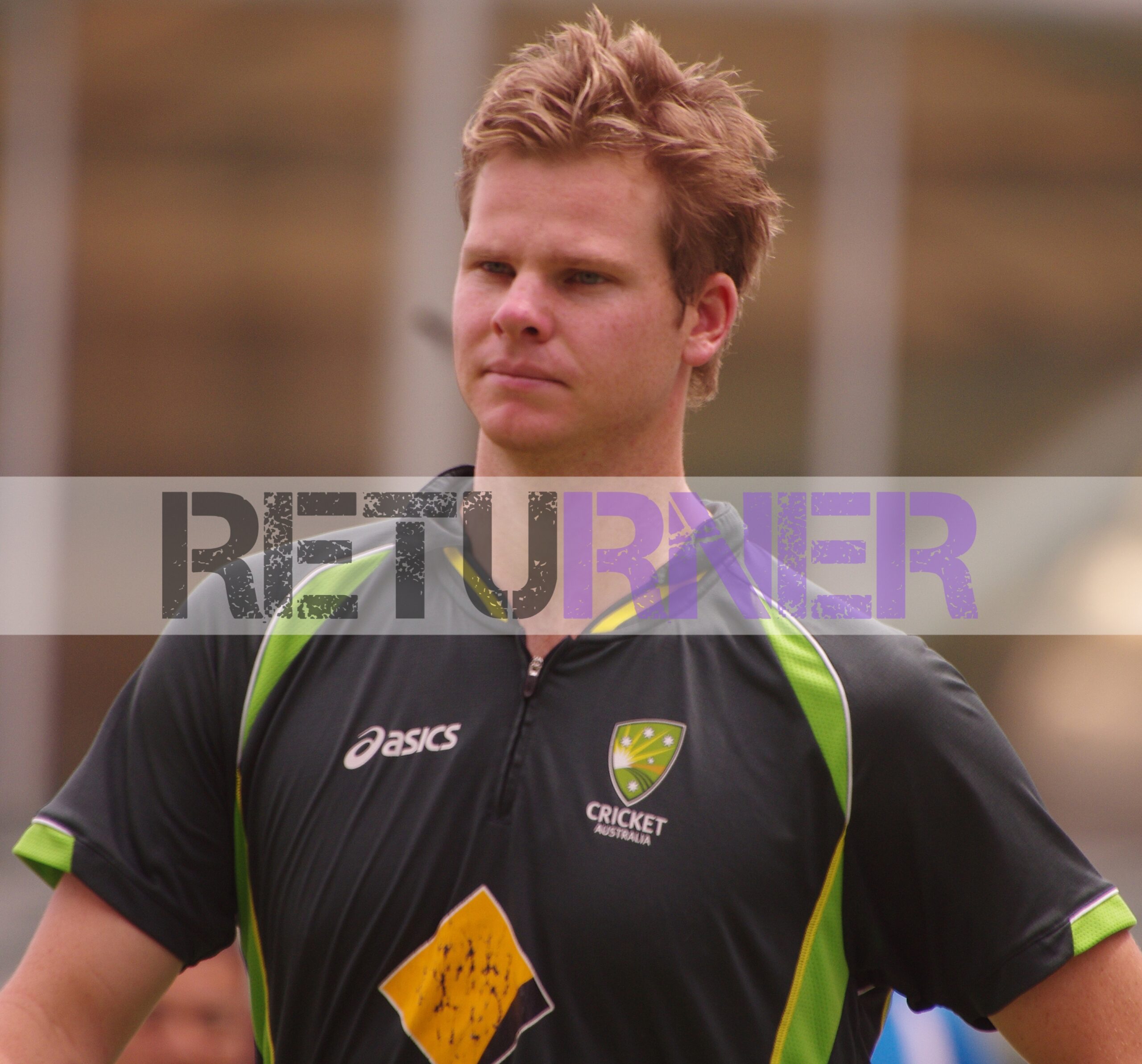

Steve Smith was born on 2 June 1989 in Kogarah, New South Wales, Australia. He is 36 years old as of 2026. He grew up in Sydney and attended Menai High School, where his love for cricket grew stronger. He started his career as a leg-spin bowler but later became one of the finest batsmen in modern cricket.
Smith made his first-class debut for New South Wales in 2008. Two years later, he played his first international match for Australia. His Test debut came in 2010 against Pakistan at Lord’s. Over time, he transformed into a top-order batter and became the backbone of Australia’s batting lineup.
In 2015, Smith was named captain of the Australian cricket team. He led the side across formats and earned praise for his leadership and batting. His career faced a setback in 2018 due to the ball-tampering scandal in South Africa, which led to a one-year suspension. However, he returned strongly in the 2019 Ashes series, scoring heavily and proving his resilience.
Smith has achieved remarkable success in cricket. He has scored more than 9,500 runs in Test matches with an average above 58, placing him among the greatest batsmen since Sir Donald Bradman. He has also won several ICC awards, including ICC Test Player of the Year. His performances in the Ashes and World Cup tournaments have cemented his reputation as one of Australia’s most reliable players.
He continues to play for Australia in Tests and limited-overs formats. Domestically, he represents New South Wales and plays in the Big Bash League for Sydney Sixers. He has also played in the Indian Premier League for teams like Rajasthan Royals and Rising Pune Supergiant. His consistency and determination have made him a respected figure in cricket worldwide.
Steve Smith is admired for his unique batting style, sharp cricketing mind, and ability to perform under pressure. His journey from a young spinner to one of the best batsmen in the world shows his dedication and hard work. He remains a key player for Australia and a role model for aspiring cricketers.
Steven Peter Devereux Smith Early Life and Background
Steven Peter Devereux Smith was born on June 2, 1989, in Kogarah, New South Wales, a southern suburb of Sydney. He grew up in a household with diverse cultural influences; his father, Peter, is Australian and holds a degree in chemistry, while his mother, Gillian, is English. This lineage granted him dual Australian and British citizenship from birth. From a very young age, he showed an intense, almost singular obsession with cricket. He spent hours in his backyard and at local nets, often coached by his father, who recognized his son’s natural coordination and hand-eye skills early on.
His childhood was defined by a steady rise through the junior cricket ranks in the St George region. He was known as a quiet but incredibly determined young player who possessed a “hungry” attitude toward batting. Interestingly, during his early years, he was primarily viewed as a batting all-rounder who bowled medium-pace. It was only in his mid-teens that he made the transition to leg-spin, a move that would eventually facilitate his entry into the professional and international arenas. His upbringing in Sydney’s competitive grade cricket environment provided the grit and technical foundation required for his later transformation into a modern batting legend.
Steven Peter Devereux Smith Education and Youth Career
Steven Peter Devereux Smith attended Menai High School in Sydney’s southern suburbs. However, his academic journey took a backseat to his sporting ambitions when he chose to leave school at the age of 17. This bold decision was driven by an opportunity to play club cricket in England for Sevenoaks Vine in the Kent Cricket League. His time in the UK was incredibly productive; he performed so well that he was selected to play for Surrey’s second XI, further honing his skills in unfamiliar, swinging conditions.
Upon returning to Australia, his youth career accelerated. He became a prominent member of the Australian team at the 2008 ICC Under-19 Cricket World Cup in Malaysia, where he contributed with both bat and ball. During his youth years, he transitioned from a fast-medium bowler to a leg-spinner, a change encouraged by coaches who saw potential in his wrist-spin. His education on the field continued as he moved through the New South Wales youth pathways, eventually making his way into the senior state team. This period was crucial for his development, as he learned to handle the pressures of professional environments while still a teenager, building the resilience that would characterize his later international “comeback” stories.
Steven Peter Devereux Smith Professional Career Beginnings
Steven Peter Devereux Smith officially launched his professional career on January 25, 2008, making his first-class debut for New South Wales (NSW) against Western Australia at the Sydney Cricket Ground. He made an immediate impression, not just with his bowling, but as a reliable lower-order batsman. By the end of the 2009–10 domestic season, he had achieved a remarkable first-class average of over 50, a clear sign that his batting was rapidly overtaking his bowling as his primary strength. He was also a key part of the NSW team that won the inaugural T20 Champions League in 2009 in India.
His early professional years were marked by his versatility. He was the leading wicket-taker in the 2008 Big Bash tournament and even filled in as captain for the Sydney Sixers when senior players were on national duty. These beginnings saw him labeled as “the next Shane Warne” due to his leg-spin, a comparison that put immense pressure on his young shoulders. However, his professional evolution was unique; he used his domestic opportunities to reinvent his technique, moving away from a specialist bowling role toward becoming a top-order batter. This period of “searching” for his true identity on the pitch was essential for the technical mastery he would later display on the world stage.
Steven Peter Devereux Smith Rise in International Cricket
Steven Peter Devereux Smith made his international debut for Australia in a T20I against Pakistan in Melbourne in February 2010. His ODI debut followed shortly after against the West Indies. However, his most significant milestone arrived on July 13, 2010, when he made his Test debut against Pakistan at Lord’s. At the time, he was selected primarily as a leg-spinner who batted at number eight. He performed admirably with the ball, taking three wickets in the second innings to help Australia secure a victory.
His rise, however, was not linear. After a difficult 2010–11 Ashes series where he struggled for consistency, he was dropped from the national side for nearly two years. This period of exile was the true making of the player. He returned to domestic cricket and completely overhauled his batting technique, adopting a unique “fidgety” stance and a pronounced back-and-across trigger movement. He was recalled to the Test team for the 2013 tour of India as a specialist batsman. He finally silenced critics during the 2013 Ashes in England by scoring his maiden Test century at The Oval. This marked the beginning of his ascent to becoming Australia’s premier batsman and one of the world’s most dominant run-scorers.
Steven Peter Devereux Smith Captaincy and Leadership
Steven Peter Devereux Smith was appointed as Australia’s 45th Test captain in late 2014, initially filling in for the injured Michael Clarke during a home series against India. He enjoyed a dream start to his leadership, scoring centuries in all four Tests of that series. He was officially named the permanent captain across all formats in 2015. Under his leadership, the Australian team adopted a gritty, competitive identity that mirrored his own work ethic. His captaincy was marked by a phenomenal personal batting average of over 70 while leading the side, proving that the extra responsibility only enhanced his performance.
His leadership highlights include leading Australia to a dominant 4-0 Ashes victory at home in 2017–18 and a historic Test victory on a turning track in Pune, India. However, his style of leadership was often described as leading by example rather than through vocal tactical brilliance. He fostered a culture of extreme dedication to the craft of batting. While his tenure was filled with significant on-field success, it was also a period where the team’s aggressive “win-at-all-costs” culture began to draw scrutiny. Despite this, he remained one of the most respected figures in the dressing room until the events of 2018 fundamentally altered the course of his career and Australian cricket.
Steven Peter Devereux Smith Sandpaper Controversy and Comeback
Steven Peter Devereux Smith faced the darkest period of his career in March 2018 during the third Test against South Africa in Cape Town. He admitted to being part of a “leadership group” that sanctioned a plan for Cameron Bancroft to alter the condition of the ball using sandpaper. The ensuing “Sandpapergate” scandal shocked the cricketing world and led to a one-year ban from international and domestic cricket for Smith and David Warner. A tearful press conference at Sydney airport, where he took full responsibility for the “failure of leadership,” became one of the most poignant images in Australian sports history.
His comeback in 2019 was nothing short of legendary. Returning to the international stage for the 2019 Ashes in England, he faced hostile crowds and relentless booing. He responded with one of the greatest batting performances in the history of the game, scoring 144 and 142 in the first Test at Edgbaston. He ended the series with 774 runs at an incredible average of 110.57, single-handedly ensuring Australia retained the Ashes. This “redemption tour” transformed the public’s perception of him, replacing anger with awe at his mental fortitude. He proved that while his leadership had been compromised, his genius with the bat remained untouched, cementing his status as a resilient icon of the game.
Steven Peter Devereux Smith Career Achievements and Records
Steven Peter Devereux Smith is widely regarded as the greatest Test batter since Sir Donald Bradman. As of early 2026, he has amassed over 10,700 Test runs at a staggering average of 56.53. One of his most historic achievements occurred on January 6, 2026, during the final Ashes Test at the Sydney Cricket Ground, where he surpassed Sir Donald Bradman’s long-standing record for the most Ashes runs by an Australian, reaching a career tally of 5,085 runs against England. He also holds the record for 37 Test centuries, placing him second only to Bradman in terms of hundreds scored for Australia.
His list of accolades is extensive. He has won the Allan Border Medal four times (2015, 2018, 2021, 2023) and was named the ICC Men’s Test Player of the Decade for 2011–2020. He reached an ICC Test batting rating of 947, the second-highest of all time. Beyond the long format, he has been a three-time World Cup winner, contributing to Australia’s triumphs in the 2015 ODI, 2021 T20, and 2023 ODI tournaments. His fielding is equally elite; he recently became the record holder for the most catches by a fielder against a single team in Test cricket. These records reflect a player of unparalleled consistency and dominance across more than a decade of international cricket.
Steven Peter Devereux Smith Current Career and Legacy
Steven Peter Devereux Smith remains a vital pillar of the Australian Test and ODI squads as of 2026. Despite being 36 years old, his appetite for runs and his legendary “shadow batting” routines show no signs of waning. He continues to play a mentoring role for younger batters while maintaining his spot as the team’s premier number four. Domestically, he remains loyal to New South Wales and the Sydney Sixers, occasionally appearing in the Big Bash League to the delight of local fans. His current focus is on the World Test Championship and maintaining Australia’s dominance in the Ashes.
His legacy is that of a “batting scientist” who mastered the art of problem-solving at the crease. He will be remembered for his unique, unorthodox technique that defied coaching manuals but produced unmatched results. More importantly, his legacy is one of redemption. He transitioned from being the face of a national scandal to a respected elder statesman of the game. He proved that professional failure does not have to be final. By the time he eventually retires, he will not just be remembered for his 10,000-plus runs, but for his “unbreakable spirit” and his role in restoring the pride and integrity of the Baggy Green.
Steve Smith Wife (Inquiry into Domestic Partnership and Private Marital Status)
Steve Smith Wife is Dani Willis, a former law student from Sydney who married him in 2018. Public appearances often show Steve Smith Wife supporting him during major cricket tournaments, including the Ashes and World Cup. Despite her presence at key events, Steve Smith Wife maintains a relatively private lifestyle away from media attention.
Steve Smith Age (Chronological Lifecycle Milestone and Professional Maturity Stage)
Born on 2 June 1989 in Kogarah, New South Wales, Steve Smith age is currently 36. His date of birth places him among the senior cricketers still active in Australia’s squad. Steve Smith age reflects a long career that began in his early twenties and continues at the highest level.
Steve Smith Stats (Performance Metrics and Competitive Field Record Overview)
Steve Smith Stats in Test cricket show more than 9,500 runs at an average above 58, placing him among the most consistent batters of his generation. His ODI record includes over 5,000 runs with multiple centuries, proving his adaptability across formats. Steve Smith Stats in T20 internationals highlight his role as a dependable top-order player, adding balance to Australia’s batting lineup.
Steve Smith Height (Physical Stature Metrics and Vertical Body Frame Dimensions)
Steve Smith Height measures 1.76 meters, giving him a balanced frame well suited for batting. His stature allows Steve Smith Height to provide stability at the crease while maintaining agility in the field. Observers often note that Steve Smith Height contributes to his distinctive batting style and strong presence on the pitch.
Steve Smith Profile Table (Structured Data Matrix of Essential Biographical Reference Points)

| Profile | Information |
| Steve Smith career | Australian International Cricketer and Former Captain |
| Steve Smith real name | Steven Peter Devereux Smith |
| Steve Smith age | 36 years old |
| Steve Smith date of birth | June 2, 1989 |
| Steve Smith net worth | Estimated $25–30 million USD |
| Steve Smith wife / spouse | Dani Willis |
| Steve Smith children | None |
| Steve Smith parents | Peter Smith (Father) and Gillian Smith (Mother) |
| Steve Smith religion | Not known |
| Steve Smith state of origin | New South Wales, Australia |
| Steve Smith alma mater | Menai High School |
| Steve Smith education | Completed secondary education at Menai High School (left at 17 for cricket) |
| Steve Smith nationality | Australian and British (Dual Citizenship) |
Leave a Reply