

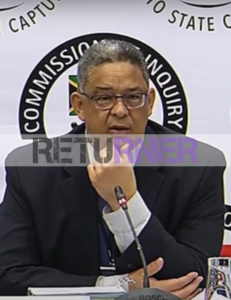
Robert McBride was born on July 6, 1963, in Durban, South Africa. He grew up during the apartheid era, which shaped his views and pushed him into activism. He attended schools in Durban and later pursued studies in public administration and policing. His education and training prepared him for leadership roles in law enforcement and government.
As a young man, he joined Umkhonto we Sizwe, the armed wing of the African National Congress. He became known for his involvement in the 1986 Magoos Bar bombing in Durban, which targeted apartheid supporters. He was arrested, convicted, and sentenced to death, but his sentence was later commuted. He was eventually released and pardoned under the Promotion of National Unity and Reconciliation Act, which recognized his actions as part of the struggle against apartheid.
After apartheid ended, Robert McBride transitioned into public service. He was appointed Chief of Police for the Ekurhuleni Metropolitan Municipality, where he oversaw policing strategies and community safety. He also held senior positions in government, including leadership roles in the Independent Police Investigative Directorate. His work focused on accountability, reform, and improving policing standards in South Africa.
His achievements include contributing to the transformation of policing in a democratic South Africa. He played a role in strengthening oversight of law enforcement and promoting justice. His career reflected resilience and determination, as he moved from being a resistance fighter to a senior police official.
Robert McBride worked mainly from the Ekurhuleni Metropolitan Police Department headquarters and later from government offices in Pretoria. He balanced administrative duties with public safety responsibilities and became a well-known figure in South African law enforcement.
He is married and has children, though he keeps his family life private. His success is measured by his rise from an anti-apartheid activist to a senior police chief. His journey shows how personal conviction and persistence can shape a career in public service.
His legacy is complex. He is remembered both for his role in the struggle against apartheid and for the controversies that followed him in policing. Despite criticism and legal challenges, he remains a significant figure in South Africa’s history, representing the difficult transition from resistance to governance.
Robert McBride Early Life and Background in Durban
Robert McBride grew up in the racially segregated suburb of Wentworth, located on the outskirts of Durban. His childhood was deeply marked by the harsh realities of the apartheid system, which divided communities and limited the opportunities available to people of color. Born to Derrick and Doris McBride, both of whom were schoolteachers, he was raised in an environment that valued education but remained acutely aware of systemic injustice. His father was a particularly strong influence, teaching him martial arts to protect himself in a neighborhood where gang activity was a constant threat. These early experiences with street violence and police harassment quickly politicized the young McBride. He witnessed firsthand the disparities in South African society, which fueled a growing desire to challenge the status quo. The discipline instilled by his parents helped him avoid falling into criminal life, directing his energy instead toward political awareness. This formative period in Durban established the foundational beliefs and physical toughness that would later define his role as a prominent figure in the resistance against minority rule.
Robert McBride Education and Training in Public Administration
The educational journey of Robert McBride was a blend of formal schooling and specialized training tailored for leadership. He attended Fairvale High School in Wentworth, where he excelled in both academics and extramural activities like rugby and boxing. After completing his secondary education, he initially enrolled at the University of Natal to study Mechanical Engineering but later pivoted toward career paths that aligned with his growing political commitment. He attended Bechet Teacher Training College, where he became actively involved in student politics, serving on the Student Representative Council. Over the years, he expanded his academic focus to include law enforcement and public administration, recognizing the need for formal qualifications in a post-apartheid governance structure. His transition into the civil service was supported by professional training modules that covered senior management and public safety logistics. This diverse educational background allowed him to bridge the gap between his history as a grassroots activist and his future as a senior municipal official. His pursuit of knowledge was a strategic effort to prepare for the administrative complexities of a democratic South Africa.
Robert McBride Career Beginnings and Resistance Activities
The early professional life of Robert McBride was defined by his membership in Umkhonto we Sizwe (MK), the armed wing of the African National Congress. During the 1980s, he became a central figure in the underground resistance, carrying out sabotage operations intended to disrupt the apartheid regime. His most notable and controversial action occurred in 1986 with the car bombing of Magoo’s Bar and the Why Not Restaurant on the Durban beachfront. The attack resulted in the deaths of three civilians and injured dozens more, leading to his capture and subsequent conviction for terrorism. While on death row, he became a symbol of the struggle for liberation, eventually receiving a reprieve as South Africa transitioned toward democracy. He was released in 1992 and later received amnesty through the Truth and Reconciliation Commission (TRC), after providing a full disclosure of his activities. These early years were characterized by extreme risk and a total commitment to the armed struggle, a period that would fundamentally shape his public image and his later career in law enforcement.
Robert McBride Rise in Law Enforcement and Public Safety
Following the end of apartheid, Robert McBride transitioned from a guerrilla fighter to a senior figure in the South African security cluster. His most prominent appointment came in 2003 when he was named the Chief of Police for the Ekurhuleni Metropolitan Municipality. In this role, he was tasked with merging various local security units into a cohesive metropolitan police force. He focused on implementing strict operational standards and enhancing the visibility of law enforcement in the East Rand region. His tenure was marked by a hardline approach to crime and a push for greater accountability among his officers. He also served in high-profile positions within the Department of Foreign Affairs and was later appointed as the Executive Director of the Independent Police Investigative Directorate (IPID). His rise through these structures was a testament to his administrative capability and his deep understanding of South Africa’s security landscape. Despite the challenges of transitioning from the underground to official state power, he remained a key player in shaping contemporary policing strategies.
Robert McBride Achievements in Policing and Governance
Throughout his career in the public sector, Robert McBride achieved significant milestones in the reform of South African law enforcement. As the head of the Ekurhuleni Metropolitan Police Department, he successfully oversaw the modernization of the force, introducing new technologies and community-centered policing models. One of his major achievements was his work at IPID, where he led high-stakes investigations into corruption and misconduct within the police service. He became known as a fierce advocate for the independence of oversight bodies, famously winning a Constitutional Court battle to protect his office from political interference. His commitment to fighting “state capture” and systemic graft earned him respect from civil society organizations and legal experts. Additionally, his contributions to the Truth and Reconciliation process helped pave the way for other former combatants to integrate into the new democratic order. His efforts to professionalize the security forces and uphold the rule of law remain the core pillars of his professional legacy in post-1994 South Africa.
Robert McBride Work and Professional Life at Head Office
The daily professional routine of Robert McBride involved managing complex safety operations from the Ekurhuleni Metropolitan Police headquarters. His work was a demanding combination of strategic policy development and direct operational oversight. As a chief of police, he was responsible for the conduct and deployment of thousands of officers across a vast and diverse metropolitan area. He was known for being a “hands-on” leader who frequently appeared at crime scenes and roadblocks to personally verify that departmental protocols were being followed. His office was often the center of high-pressure decision-making, especially during periods of civil unrest or major public events. In his later roles at IPID and the State Security Agency, his work shifted toward the investigation of elite-level corruption and national security threats. This professional life required a high degree of resilience, as he often faced pushback from powerful political figures. His desk was the site of numerous reports that sought to bring transparency and integrity back to the nation’s most critical security institutions.
Robert McBride Personal Life and Family Resilience
Away from the high-stakes world of national security, Robert McBride maintains a private life centered on his family and personal development. He was married to Paula Leyden while still on death row, a union that garnered significant media attention during the liberation struggle. Together they had children, and despite the eventual end of their marriage, he has remained a devoted father. His personal life has been a source of strength, providing a sanctuary from the relentless scrutiny that comes with his public roles. He is known among his friends as a man of iron will and deep loyalty, qualities that were forged during his years as an activist and prisoner. Despite the numerous controversies and legal battles that have punctuated his career, he has maintained a reputation for personal resilience. He avoids the limelight when not in an official capacity, preferring to focus on his hobbies and the well-being of his loved ones. This private stability has been essential in helping him weather the storms of South African political life.
Robert McBride Net Worth and Professional Success
While Robert McBride has never publicly disclosed his exact net worth, his financial success is rooted in his decades of senior service within the South African government. As a top-tier civil servant and a former head of major state institutions, he has earned a salary and benefits package commensurate with high-ranking executive positions. His roles as Chief of Police, Executive Director of IPID, and head of the foreign branch of the State Security Agency have provided him with a level of economic stability common among senior public officials. His success is not just measured in monetary terms but also in the substantial influence he has wielded over the country’s security architecture. He has lived a lifestyle that reflects his professional standing, though he remains focused on his career rather than the accumulation of personal wealth. His financial trajectory mirrors the rise of the post-apartheid black middle class and elite, having transitioned from a revolutionary fighter with no assets to a respected, high-earning professional in a democratic state.
Robert McBride Controversies and Legacy in Law Enforcement
The legacy of Robert McBride is deeply intertwined with the controversies that have defined his life and career. The 1986 car bombing remains the most polarizing chapter, with some viewing him as a hero of the struggle and others as a cold-blooded killer. His policing career was also marked by high-profile incidents, including an arrest in Mozambique on gun-running charges in 1998, which were later dropped. In 2006, he was involved in a car accident that led to charges of drunken driving and defeating the ends of justice, though he maintained he was suffering from a medical condition. Despite these setbacks, many recognize his legacy as one of a dedicated anti-corruption crusader who was willing to challenge the most powerful figures in government. He is seen as a complex figure who represents the difficult transition from armed resistance to state governance. His legacy continues to be a subject of intense debate, reflecting the broader challenges of reconciliation and justice in a country still healing from its divided past.
Robert McBride Age (Chronological Lifecycle and Personal Maturity Milestones)
Robert McBride was born on July 6, 1963. Based on this birth date, the current Robert McBride age is 62 years old.
Robert McBride Wife (Matrimonial Status and Domestic Life Context)
Robert McBride married Paula Leyden on May 10, 1989. The couple subsequently separated and divorced. He later entered a second marriage with a woman named Nina. He also has a son named Owethu Mthembu with his second wife.
Robert McBride Prosecutor (Legal Adversaries and Courtroom Interaction Scope)
Petronel du Plessis served as the state prosecutor during the legal proceedings related to Robert McBride’s 2006 drunk-driving case. In separate matters, Henk Strydom acted as the senior public prosecutor in Boksburg who handled cases involving officers connected to the investigation. These prosecutors represented the state’s interests in addressing charges of fraud, drunken driving, and defeating the ends of justice.
Robert McBride Children (Parental Relations and Family Successor Overview)
Robert McBride has four children. He has two daughters with his first wife, Paula Leyden. He also has a son named Owethu Mthembu with his second wife, Nina. Additionally, his family includes a fourth child from his private domestic life.
Robert McBride Nationality (Geopolitical Allegiance and Sovereign Identity Status)
Robert McBride is a citizen of South Africa. He was born in Durban, and his official nationality is South African. This legal status has defined his role as a public servant and a former head of state security agencies within the country.
Robert McBride Profile Table (Structured Biographical Synthesis and Quick Reference)
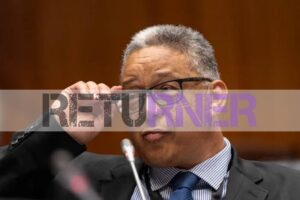
| Profile | Information |
| Robert McBride career | Former Chief of Police for Ekurhuleni Municipality; Anti-Apartheid Activist; Former Executive Director of IPID |
| Robert McBride real name | Robert John McBride |
| Robert McBride age | 62 |
| Robert McBride date of birth | July 6, 1963 |
| Robert McBride net worth | Not known |
| Robert McBride wife / spouse | Paula Leyden (separated/divorced) |
| Robert McBride children | 4 |
| Robert McBride parents | Derrick and Doris McBride |
| Robert McBride religion | Not known |
| Robert McBride state of origin | KwaZulu-Natal, South Africa |
| Robert McBride alma mater | Fairvale High School; Bechet Teacher Training College; University of South Africa |
| Robert McBride education | Law Enforcement, Public Administration, and Teacher Training |
| Robert McBride nationality | South African |
Leave a Reply