
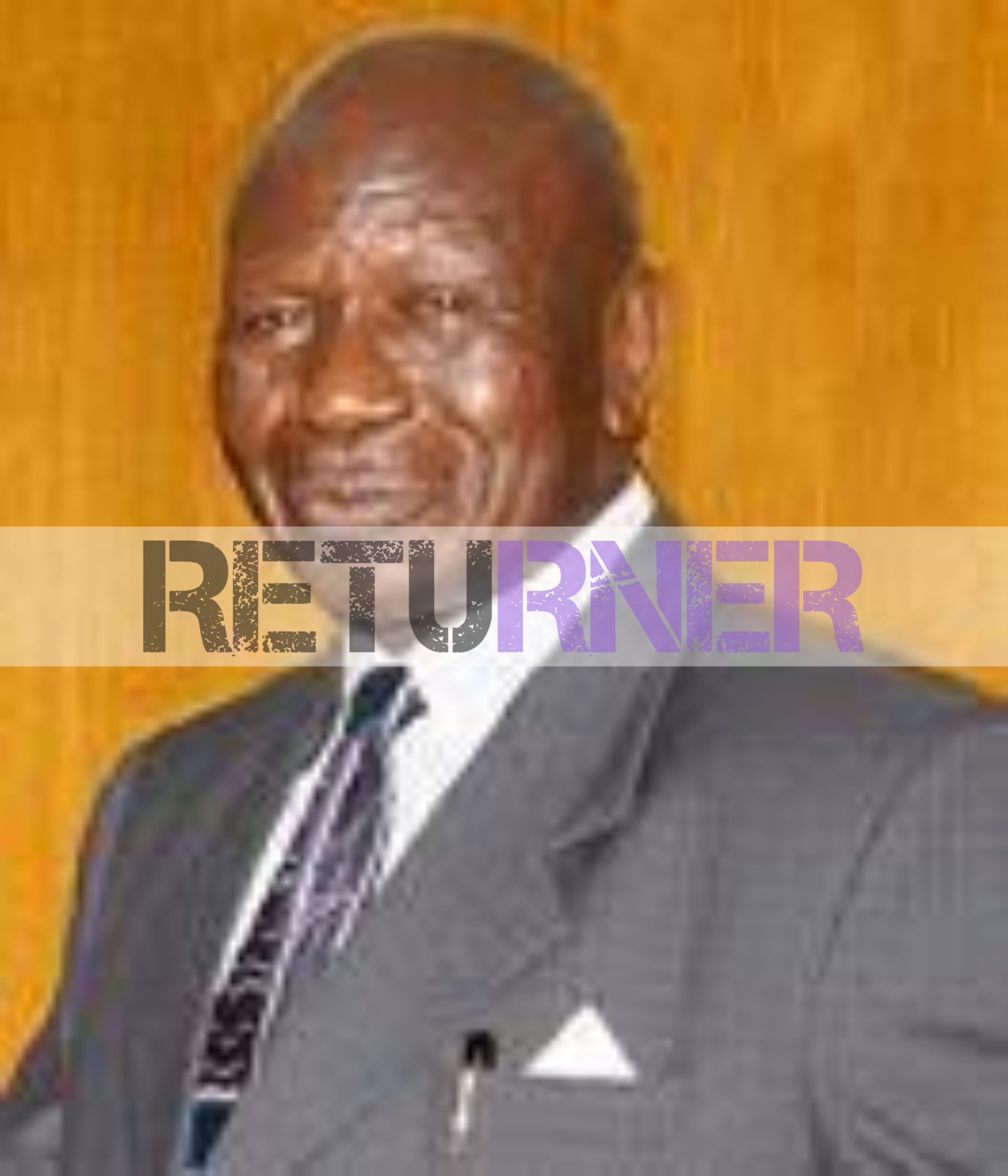
Arthur Moody Awori was born on December 5, 1927, in Busia, Kenya. He grew up in a large family led by Canon Jeremiah Awori and Mariamu Awori. His upbringing in western Kenya shaped his values of discipline and service. He attended local schools before joining Makerere University in Uganda, where he studied and prepared for a career in leadership. His education gave him a strong foundation that later guided his work in public service.
He began his career as a public servant and soon entered politics. He was elected Member of Parliament for Funyula Constituency, where he represented his community with dedication. His political journey gained momentum in the early 2000s, and he became a respected figure in national leadership.
In September 2003, after the death of Vice President Michael Kijana Wamalwa, Moody Awori was appointed Vice President of Kenya by President Mwai Kibaki. He served in this position until January 2008, when Kalonzo Musyoka succeeded him. During his time as Vice President, he focused on governance reforms and social development. He became known for his efforts to improve prison conditions and promote rehabilitation programs.
His achievements included guiding national policies, supporting community development, and strengthening Kenya’s governance structures. He also authored his autobiography titled Riding on a Tiger, where he shared his experiences and reflections on politics. His book added to his legacy as a leader who valued transparency and storytelling.
Moody Awori worked mainly in Nairobi as part of the Government of Kenya. His career combined politics, writing, and advocacy. He became an elder statesman admired for his wisdom and calm leadership style. His success was measured not only by the offices he held but also by the respect he earned across the country.
He married Rose Awori and together they raised five children. He maintained strong family ties and was part of a notable family that included siblings such as Aggrey Awori and Mary Okelo. His family background reflected a tradition of leadership and service.
Arthur Moody Awori’s legacy is tied to his role as the ninth Vice President of Kenya and his contribution to governance. He remains remembered as Uncle Moody, a leader who combined humility with authority. His influence continues to inspire younger generations in politics and public service.
Arthur Moody Awori Roots in Busia and Family Heritage
The story of Arthur Moody Awori begins in the western region of Kenya, specifically within the vibrant community of Busia. He emerged from a household that is widely regarded as one of the most intellectually gifted and influential families in the country. His father, Canon Jeremiah Awori, was a pioneer clergyman in the Anglican Church, a role that commanded immense respect and set a high moral standard for the household. His mother, Mariamu Awori, was equally pivotal in shaping the character of her children, managing a large home that valued discipline and service. This unique upbringing provided a strong foundation rooted in faith, hard work, and community responsibility. The environment was not just about survival but about thriving through education and leadership.
The Awori family tree is notable for producing achievers across various sectors. Arthur grew up alongside siblings who would also etch their names into history, such as Aggrey Awori, who became a prominent politician in neighboring Uganda, and Mary Okelo, a trailblazer in Kenya’s banking and education sectors. This competitive yet supportive sibling dynamic pushed him to carve out his own identity. The values instilled during his formative years in Busia were centered on public service and integrity. These early lessons in leadership and social obligation became the guiding principles of his later life. He learned early on that privilege came with the duty to serve the less fortunate, a philosophy that would define his political persona for decades.
Arthur Moody Awori Academic Path and Intellectual Foundation
Education was a non-negotiable priority in the Awori household, serving as the primary vehicle for personal and societal advancement. Arthur Moody Awori began his academic journey in local schools within Western Kenya, where he demonstrated an early aptitude for leadership and learning. His educational pursuits eventually led him to the prestigious Makerere University in Uganda. At the time, Makerere was the intellectual hub of East Africa, attracting the brightest minds from across the region. His time there was transformative, exposing him to diverse political ideologies and pan-African thought. It was an era of awakening, and the university environment honed his ability to analyze complex social issues and articulate solutions.
Beyond the classroom, his time at Makerere allowed him to build a network of peers who would later become key figures in East African governance and commerce. The rigorous academic training he received provided him with a structured way of thinking that distinguished him from many of his contemporaries. He did not view education merely as a means to a job but as a tool for nation-building. This intellectual grounding was evident throughout his career, where he often favored reasoned debate over populist rhetoric. His qualifications gave him the credibility to navigate the technical aspects of government ministries and the boardroom, bridging the gap between technocratic efficiency and political necessity.
Arthur Moody Awori Entry into Public Service and Governance
Before ascending to the high offices of national government, Arthur Moody Awori dedicated years to establishing himself as a reliable community leader and public servant. His entry into the public sphere was gradual and calculated, focusing on tangible development rather than immediate fame. He initially worked in the private sector, where he gained valuable experience in management and corporate governance. However, the pull of public service was strong, driven by the needs of his home region. He saw the gaps in infrastructure and social services in Funyula and sought to address them directly. This desire to improve the lives of his neighbors naturally segued into a career in politics.
His grassroots approach endeared him to the electorate. He did not appear as a distant elite but as a relatable figure who understood the daily struggles of the common citizen. This period was characterized by his direct involvement in community projects, from building schools to improving healthcare access. He served as the Member of Parliament for Funyula Constituency, a position he held for multiple terms. During these early years in parliament, he built a reputation as a unifying figure who avoided divisive politics. He focused on constituency development, ensuring that Funyula received its fair share of national resources. This solid track record at the constituency level provided the launchpad for his eventual rise to national prominence.
Arthur Moody Awori Political Ascent and Vice Presidency
The political career of Arthur Moody Awori reached its zenith during the administration of President Mwai Kibaki. He had already established himself as a seasoned politician, but his elevation to the position of Vice President in September 2003 marked a turning point in his legacy. This appointment came following the tragic death of Michael Kijana Wamalwa, creating a vacuum that required a steady and experienced hand. His selection was seen as a move to stabilize the coalition government and maintain regional balance. As the 9th Vice President of Kenya, he brought a sense of calm and maturity to an often turbulent political landscape.
During his tenure, he became affectionately known as “Uncle Moody,” a moniker that reflected his approachable demeanor and elder statesman status. He served in this capacity until January 2008, eventually being succeeded by Kalonzo Musyoka. His time in the second-highest office in the land was marked by unwavering loyalty to the President and a focus on government functionality. He navigated the complex coalition politics of the NARC government with diplomacy. Unlike younger, more aggressive politicians, he relied on consensus-building. His rise was a testament to the power of patience and resilience in politics. He proved that longevity and consistency could lead to the highest levels of leadership, surviving various political realignments to serve at the top.
Arthur Moody Awori Legislative Reforms and Literary Contributions
One of the most defining aspects of Arthur Moody Awori’s time in government was his commitment to prison reform. As the Minister for Home Affairs, a portfolio he held alongside the Vice Presidency, he took a personal interest in the conditions of Kenyan correctional facilities. He championed a humanitarian approach, arguing that prisoners were still citizens who deserved dignity. Under his watch, significant changes were introduced, including the provision of better bedding, improved diet, and the introduction of television sets for inmates. These reforms were radical at the time and shifted the focus from purely punitive measures to rehabilitation. His visits to prisons were frequent, and he engaged directly with inmates to understand their plight, earning him respect across the political divide.
Beyond his legislative achievements, he also contributed to the country’s historical record through his writing. He authored the autobiography titled Riding on a Tiger, which offers a detailed account of his life and the turbulent waters of Kenyan politics. The book provides rare insights into the inner workings of the government and the challenges of leadership. In it, he narrates his journey from a boy in Busia to the Vice Presidency, offering lessons on integrity and survival in public life. The publication of this memoir ensured that his experiences and wisdom were preserved for future generations. It stands as a key resource for anyone seeking to understand the political history of Kenya through the eyes of one of its longest-serving participants.
Arthur Moody Awori Professional Versatility and State Roles
Arthur Moody Awori is recognized not just as a politician but as a multifaceted professional who successfully blended various roles throughout his life. His professional identity encompasses that of a corporate director, a legislator, and a high-ranking state official. Before politics consumed his schedule, he was active in the business world, sitting on the boards of several major companies. This corporate background influenced his governance style, emphasizing efficiency and accountability. He understood the language of investors and the private sector, which helped him advocate for policies that fostered economic growth. His ability to switch between the boardroom and the political rally set him apart from career politicians who had no outside experience.
In his capacity as a state officer, he handled sensitive dockets with discretion and competence. His work required him to represent Kenya on the international stage, engaging with foreign diplomats and global leaders. He was a trusted envoy for President Kibaki, often tasked with calming tensions during moments of national crisis. His versatility allowed him to remain relevant even as the political landscape shifted. He was not rigid; he adapted to the changing demands of public office while maintaining his core principles. This professional adaptability ensured that he was always a person of interest to successive governments, often called upon for advice long after leaving active elective politics.
Arthur Moody Awori Domestic Life and Kinship Ties
While his public life was visible to all, Arthur Moody Awori maintained a stable and private domestic life. He is married to Rose Awori, his long-term partner who has stood by him through the triumphs and trials of his career. Their marriage is often cited as a model of stability in the chaotic world of politics. Together, they raised a family of five children, ensuring that their offspring received the same emphasis on education and values that he had benefited from. He worked hard to shield his immediate family from the intrusive nature of the media, allowing them to pursue their own careers away from the political spotlight.
His connection to his extended family remains a significant part of his identity. The Awori clan is tight-knit, and he has always played the role of a patriarch. His relationship with his siblings, particularly the late Aggrey Awori and corporate titan Mary Okelo, was built on mutual respect and shared heritage. They often supported each other’s endeavors, creating a powerful family network that spanned across borders and industries. Despite their individual successes, the family maintained a united front, often gathering to celebrate milestones or support community initiatives in Busia. This strong kinship system provided him with an emotional anchor, keeping him grounded despite the trappings of power.
Arthur Moody Awori Financial Standing and Socioeconomic Impact
The financial success of Arthur Moody Awori is a result of decades of hard work in both the private and public sectors. He is considered one of the wealthier figures in the Kenyan political landscape, though his wealth is often described as “quiet” rather than ostentatious. His net worth is attributed to a combination of his long service in government, where he earned salaries and benefits as a Minister and Vice President, and his astute business investments. Over the years, he invested in real estate, agriculture, and shares in blue-chip companies. These ventures provided him with financial independence, allowing him to engage in politics without being easily compromised by financial backers.
His socioeconomic impact extends beyond his personal bank account. Through his influence, he attracted development projects to Western Kenya and supported numerous charitable causes. He has been a patron of various educational foundations and trusts, helping to pay school fees for underprivileged children. His financial standing allowed him to be a benefactor to his community, often funding local infrastructure projects out of pocket when government delays occurred. He is regarded as an elder statesman whose success is measured not just by what he accumulated, but by how he used his resources and influence to uplift those around him.
Arthur Moody Awori Enduring Influence on Kenyan Leadership
The legacy of Arthur Moody Awori is firmly cemented in the annals of Kenyan history. He is widely revered as a mentor to the current generation of leaders. His style of politics—devoid of hate speech and centered on development—remains a reference point for political analysts. The “Uncle Moody” brand represented a softer, more humane side of power, contrasting sharply with the authoritarian styles of the past. He proved that kindness and courtesy were not weaknesses but strengths that could sustain a long career. His tenure as Vice President is remembered as a period of stability, where the office was used to unite rather than divide.
His influence continues to be felt through the policies he initiated and the people he mentored. Many politicians who served under him or alongside him cite his guidance as pivotal in their careers. His autobiography continues to be read by students of political science and history, keeping his ideas alive in the national conversation. As an elder statesman, he occasionally comments on national issues, and his voice still commands attention and respect. He represents a bridge between the independence generation and the modern digital era of leadership. His enduring impact is that of a gentleman politician who served his country with dignity, leaving the stage with his reputation intact and his contributions acknowledged by friend and foe alike.
Arthur Moody Awori Age (Historical Birth Timeline and Longevity Milestones)
Arthur Moody Awori was born on December 5, 1927. This birth date indicates that the Arthur Moody Awori age is 98 years old.
Arthur Moody Awori Sons (Male Progeny and Professional Life Paths)
Arthur Moody Awori and his wife, Rose Awori, are the parents of five children. While the former Vice President is a prominent public figure, his adult sons generally maintain a private lifestyle away from the political spotlight. Consequently, detailed information about their specific names and personal endeavors is not widely publicized in the public domain.
Arthur Moody Awori Daughter (Female Lineage and Personal Family Contributions)
Arthur Moody Awori and his wife, Rose Awori, have five children, including the late Marya Elizabeth Adjibodou who served as a senior legislative official. Marya worked as a Principal Assistant Clerk in the Kenyan Senate and had a long career in parliamentary service that began in 2005. She passed away in June 2023, an event that was publicly mourned by national leaders including the Speaker of the Senate.
Arthur Moody Awori Children (Next Generation Legacy and Upbringing Overview)
Arthur Moody Awori and his wife, Rose Awori, raised a family of five children. While the former Vice President has kept his domestic life discreet, his youngest child, Marya Elizabeth Adjibodou, was a known public servant who worked at the Senate of Kenya until 2023. The names and professional details of the remaining Arthur Moody Awori children are not widely published in the media.
Arthur Moody Awori Tribe (Ancestral Roots and Cultural Community Background)
Arthur Moody Awori belongs to the Samia sub-tribe of the Luhya ethnic community. This group is indigenous to Busia County in Western Kenya, where his family has deep historical roots. The Samia people share cultural and linguistic ties across the border into neighboring Uganda.
Arthur Moody Awori Profile Table (Quick Snapshot of Vital Biographical Data)

| Profile | Information |
| Arthur Moody Awori career | Politician, Businessman, Author, Former Vice President |
| Arthur Moody Awori real name | Arthur Moody Awori (popularly known as Uncle Moody) |
| Arthur Moody Awori age | 98 years old (as of February 2026) |
| Arthur Moody Awori date of birth | December 5, 1927 |
| Arthur Moody Awori net worth | Not publicly disclosed (High Net Worth) |
| Arthur Moody Awori wife / spouse | Rose Awori |
| Arthur Moody Awori children | 5 children (including late Marya Elizabeth Adjibodou) |
| Arthur Moody Awori parents | Canon Jeremiah Awori (Father), Mariamu Awori (Mother) |
| Arthur Moody Awori religion | Roman Catholic |
| Arthur Moody Awori state of origin | Busia County, Kenya |
| Arthur Moody Awori alma mater | Makerere University, Mang’u High School, Kakamega School |
| Arthur Moody Awori education | Tertiary studies at Makerere University, Honorary Doctorate (SNHU) |
| Arthur Moody Awori nationality | Kenyan |
Leave a Reply