
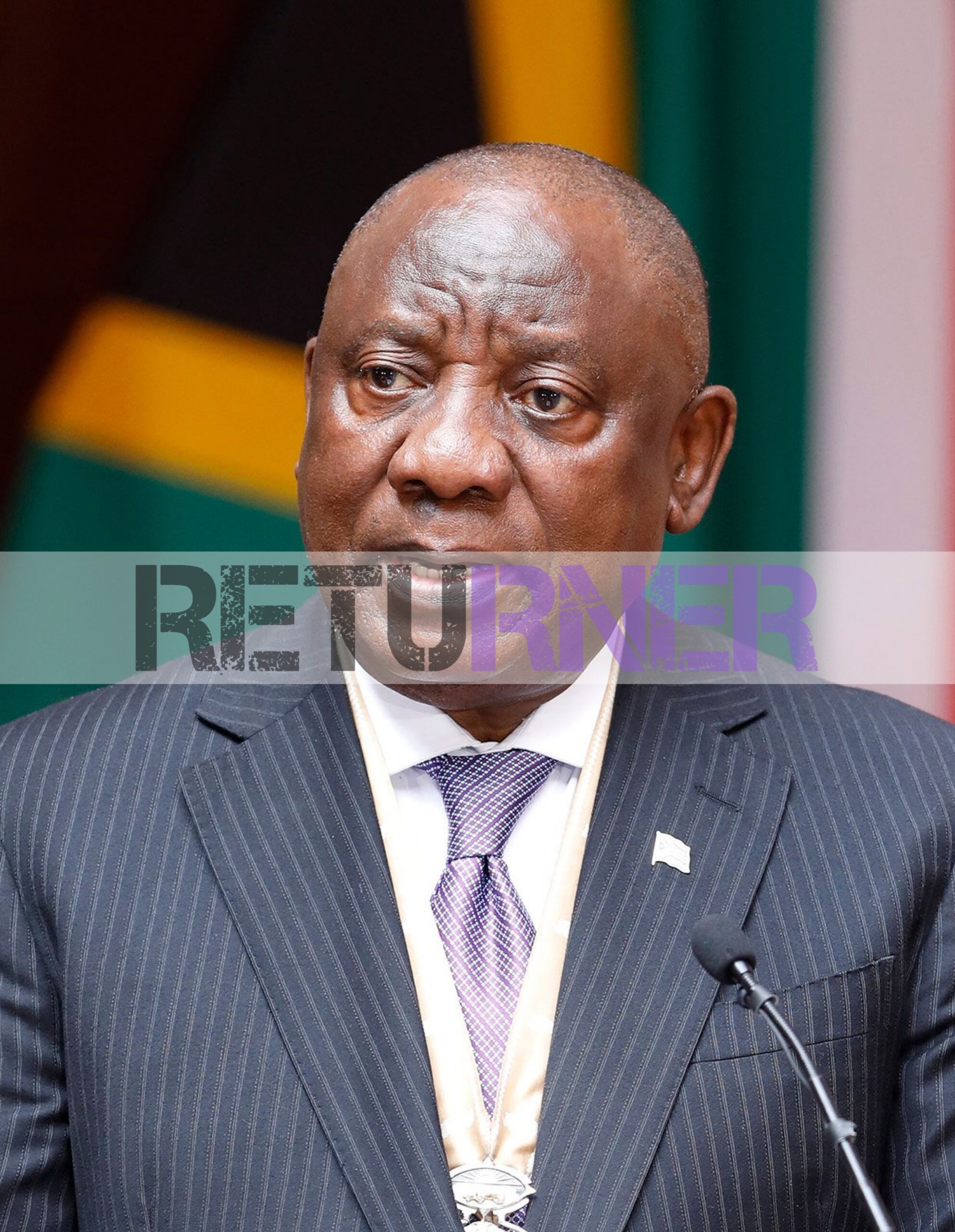
Cyril Ramaphosa was born on 17 November 1952 in Johannesburg, South Africa. He is 73 years old in 2026. His family moved to Soweto in 1962, where he attended Tshilidzi Primary School. He later completed his high school education at Mphaphuli High School in Venda in 1971. In 1972, he registered to study law at the University of the North. During his student years, he became active in politics, joining the South African Student Organization and the Black People’s Convention. His activism led to several detentions under apartheid laws, including solitary confinement in 1974 and another arrest in 1976 after the Soweto uprising.
He began his career as a law clerk while continuing his studies through the University of South Africa, where he obtained his degree. In 1982, he founded the National Union of Mineworkers, which grew into one of the most powerful unions in the country. His leadership in the union made him a key figure in the fight for workers’ rights and against apartheid.
Ramaphosa rose within the African National Congress and became its Secretary-General in 1991. He played a central role in negotiations that ended apartheid and helped draft South Africa’s democratic Constitution. After leaving politics in 1996, he entered business and built significant investments in mining, telecommunications, and fast food through his company, Shanduka Group. His success in business made him one of the wealthiest men in South Africa.
He returned to politics in 2012 and became Deputy President of the ANC. In 2014, he was appointed Deputy President of South Africa. In 2017, he was elected President of the ANC, and in 2018 he became the President of South Africa following Jacob Zuma’s resignation.
As president, Ramaphosa has focused on fighting corruption, improving the economy, and managing South Africa’s response to the COVID-19 pandemic. His leadership has faced challenges, including unemployment, inequality, and controversies such as the Phala Phala scandal. He is married to Dr. Tshepo Motsepe, and they have four children. His life reflects a journey from student activism to union leadership, business success, and ultimately the highest office in South Africa.
Cyril Ramaphosa Early Life and Background
Cyril Ramaphosa was born on November 17, 1952, in the Western Native Township of Johannesburg, South Africa. His father, Samuel Ramaphosa, was a retired policeman, and his mother, Erdmuth, raised him alongside his two siblings. In 1962, the family was forcibly relocated to Soweto, a pivotal moment that exposed him to the harsh realities of the apartheid system’s spatial segregation. He attended Tshilidzi Primary School and Sekano-Ntoane High School in Soweto before completing his matriculation at Mphaphuli High School in Sibasa, Venda, in 1971.
His upbringing in Soweto was defined by the rising tide of Black consciousness and political resistance. While at Mphaphuli High School, he was elected head of the Student Christian Movement, showing early signs of leadership. For those asking, “Where was Cyril Ramaphosa born?” his origins in Johannesburg and formative years in Soweto provided the grit and perspective that fueled his later activism. These years shaped his understanding of systemic inequality and established the foundation for his lifelong commitment to the struggle for a democratic South Africa. His journey from a township youth to a national figure remains a central part of his personal and political identity.
Cyril Ramaphosa Education and Academic Journey
Cyril Ramaphosa began his higher education at the University of the North (Turfloop) in 1972, where he registered to study law. During his time at university, he became deeply involved in student politics, joining the South African Students’ Organisation (SASO) and the Black People’s Convention (BPC). His activism led to significant personal sacrifice; he was detained in solitary confinement for 11 months in 1974 under the Terrorism Act and held for another six months following the 1976 Soweto student uprising.
Despite these interruptions, he remained determined to complete his legal training. While working as a law clerk for a Johannesburg firm, he continued his studies through correspondence with the University of South Africa (UNISA). In 1981, he successfully obtained his Bachelor of Procurationis (B. Proc) degree. PAA queries regarding “What is Cyril Ramaphosa’s educational background?” point to this resilient academic path, which combined formal law studies with the “education” of political detention. His legal expertise later became a critical asset during the multiparty negotiations that dismantled apartheid. He has since been awarded several honorary doctorates from prestigious institutions, including the University of Cape Town and the University of Massachusetts, recognizing his intellectual contributions to constitutional law.
Cyril Ramaphosa Anti-Apartheid and Labour Activism
Cyril Ramaphosa emerged as a powerful force in the anti-apartheid struggle through the labor movement. In 1982, he founded the National Union of Mineworkers (NUM), serving as its first General Secretary. Under his leadership, NUM grew from 6,000 members to over 300,000, making it the most influential union in the country. He led mineworkers in a massive 1987 strike, a landmark event that challenged the economic foundations of apartheid. He was also instrumental in the formation of the Congress of South African Trade Unions (COSATU) in 1985, which unified the labor front against the regime.
His activism extended to the core of political negotiations. Following the unbanning of the African National Congress (ANC) in 1991, he was elected its Secretary General. He served as the ANC’s chief negotiator during the Convention for a Democratic South Africa (CODESA) talks. His strategic brilliance helped secure the peaceful transition to democracy, leading to his role as Chairperson of the Constitutional Assembly. In this capacity, he oversaw the drafting of South Africa’s internationally acclaimed 1996 Constitution. His activism was not just about protest; it was about building the legal and social frameworks for a new nation, earning him the National Order of the Baobab for his service.
Cyril Ramaphosa Business Career and Shanduka Group
Cyril Ramaphosa shifted his focus to the private sector in 1996 after resigning as ANC Secretary General. He utilized the emerging Black Economic Empowerment (BEE) environment to build one of South Africa’s most successful business empires. In 2001, he founded the Shanduka Group, a black-owned investment holding company. Shanduka developed a diverse portfolio including interests in mineral resources, energy, real estate, banking, and telecoms through Seacom. By 2014, the group’s value was estimated at over R20 billion, cementing his status as one of the country’s wealthiest individuals.
His business acumen led to prominent roles across corporate South Africa. He served as the executive chairman of McDonald’s South Africa and held chairmanships at major firms like MTN, Bidvest, and Mondi. He also held non-executive directorships at Standard Bank and Alexander Forbes. During this period, he established the Shanduka Foundation (now the Cyril Ramaphosa Foundation), focusing on small business development and education through initiatives like Adopt-a-School. While his business success brought him significant wealth, it also made him a key figure in the global business community, where he advised the UN on business and human rights. He eventually exited his business interests in 2014 to avoid conflicts of interest upon becoming Deputy President.
Cyril Ramaphosa Presidency and Achievements
Cyril Ramaphosa assumed the presidency of South Africa in February 2018, following the resignation of Jacob Zuma. His tenure has been defined by a focus on “New Dawn” reforms, aimed at professionalizing the public service and tackling systemic corruption. He launched “Operation Vulindlela” to accelerate structural reforms in the energy, water, and logistics sectors. One of his key achievements was the implementation of a national minimum wage and the extension of the Social Relief of Distress grant, which provides a safety net for millions of vulnerable citizens.
Under his leadership, South Africa successfully navigated the COVID-19 pandemic and chaired the African Union from 2020 to 2021, leading the continent’s medical response. His administration has prioritized renewable energy through the Energy Action Plan and secured a “Just Energy Transition” partnership with global powers. He also oversaw the drafting of the 2025/2026 Annual Performance Plan, focusing on inclusive growth and job creation through the Presidential Employment Stimulus. Despite facing significant economic challenges, he led the ANC to form a Government of National Unity (GNU) in 2024, maintaining stability and a focus on constitutionalism. His legacy as president is increasingly tied to his efforts to rebuild state institutions and restore South Africa’s international standing.
Cyril Ramaphosa Personal Life and Family
Cyril Ramaphosa is currently married to Dr. Tshepo Motsepe, a physician and businesswoman who serves as the First Lady of South Africa. They married in 1996 and have four children together. Dr. Motsepe is the sister of mining magnate Patrice Motsepe and businesswoman Bridgette Radebe, making them one of the most prominent families in South Africa. The President was previously married to Nomazizi Mtshotshisa and Hope Ramaphosa. He is known for being private about his family life, preferring to focus on his public duties while his children maintain a low profile.
Outside of politics and business, he is a passionate cattle farmer. He is particularly famous for his interest in the Ankole breed of cattle, which he first encountered in Uganda. He imported embryos to South Africa to build a high-quality herd at his Ntaba Nyoni farm in Mpumalanga. He even co-authored a book titled Cattle of the Ages, which discusses the history and beauty of the breed. His personal life reflects a blend of traditional African values and modern leadership, as he balances the demands of the presidency with his love for agriculture and his commitment to his large extended family.
Cyril Ramaphosa Wife (Inquiry into Domestic Partnership and Private Marital Status)
Cyril Ramaphosa Wife is Dr Tshepo Motsepe, a South African physician and businesswoman who became First Lady in 2018. She married Cyril Ramaphosa in 1996 and is known for her work in public health and social development.
Cyril Ramaphosa Children (Exploration of Paternal Legacy and Familial Descendant Records)
Cyril Ramaphosa Children include four offspring whose names are often mentioned in connection with his family life. His children are known as Andile, Tumelo, Keneilwe, and Mashudu, each pursuing different paths outside politics. References to Cyril Ramaphosa Children highlight the balance he maintains between his public duties and private family responsibilities.
Cyril Ramaphosa Age (Chronological Lifecycle Milestone and Professional Maturity Stage)
Cyril Ramaphosa Age in 2026 is 73, as he was born on 17 November 1952 in Johannesburg. His date of birth places him among leaders shaped by South Africa’s struggle against apartheid. References to Cyril Ramaphosa Age often appear alongside accounts of his long career in activism, business, and politics.
Cyril Ramaphosa Religion (Personal Spiritual Beliefs and Inner Faith Based Principles)
Cyril Ramaphosa Religion is Christianity, and he has often been described as a practicing Christian. His faith is referenced in accounts of his personal life and leadership style. Mentions of Cyril Ramaphosa Religion also highlight his connection to the broader Christian community in South Africa, where religion plays a significant role in public and private life.
Cyril Ramaphosa Profile Table (Structured Data Matrix of Essential Biographical Reference Points)
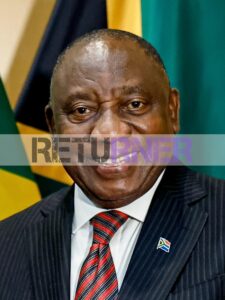
| Profile | Information |
| Cyril Ramaphosa career | President of South Africa, Businessman, and Former Union Leader |
| Cyril Ramaphosa real name | Matamela Cyril Ramaphosa |
| Cyril Ramaphosa age | 73 years old |
| Cyril Ramaphosa date of birth | November 17, 1952 |
| Cyril Ramaphosa net worth | Estimated $450 million – $500 million |
| Cyril Ramaphosa wife / spouse | Dr. Tshepo Motsepe |
| Cyril Ramaphosa children | 5 (Tumi, Andile, Keneilwe, Masana, and Tumelo) |
| Cyril Ramaphosa parents | Samuel Ramaphosa and Erdmuth Ramaphosa |
| Cyril Ramaphosa religion | Christian |
| Cyril Ramaphosa state of origin | Soweto, Johannesburg, Gauteng |
| Cyril Ramaphosa alma mater | University of South Africa (UNISA) |
| Cyril Ramaphosa education | Bachelor of Procurationis (B.Proc) |
| Cyril Ramaphosa nationality | South African |
Leave a Reply